Krasner, Pollock, and Me
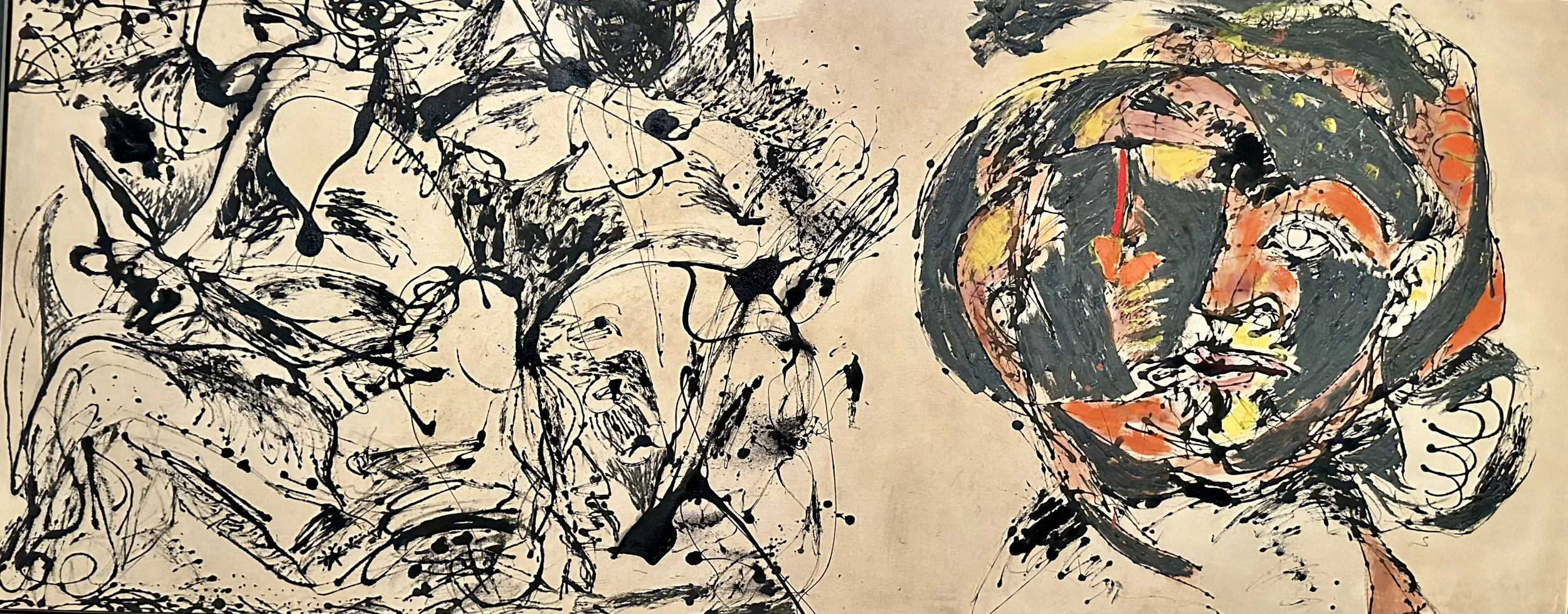
We’ll circle round to this one later, at the end of my final post on Krasner/Pollock at the Met.
First seen during teenage trips to New York’s museums to beat the heat, the first painting by Jackson Pollock that I remember loving is Autumn Rhythm. Its size, its scale: easy to love.
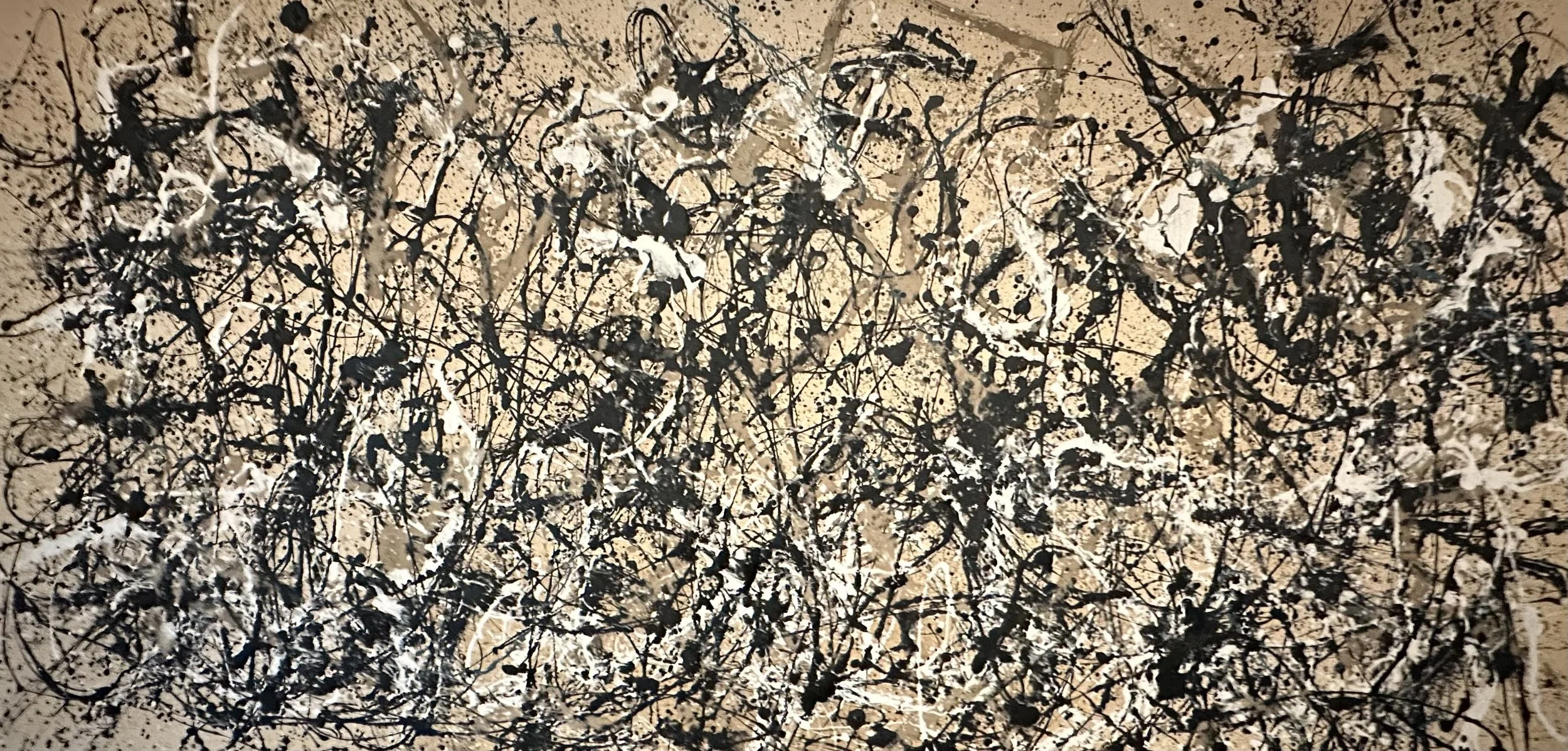
Also, its limited color palette, which still manages to pack a sense of movement within and off the frame.
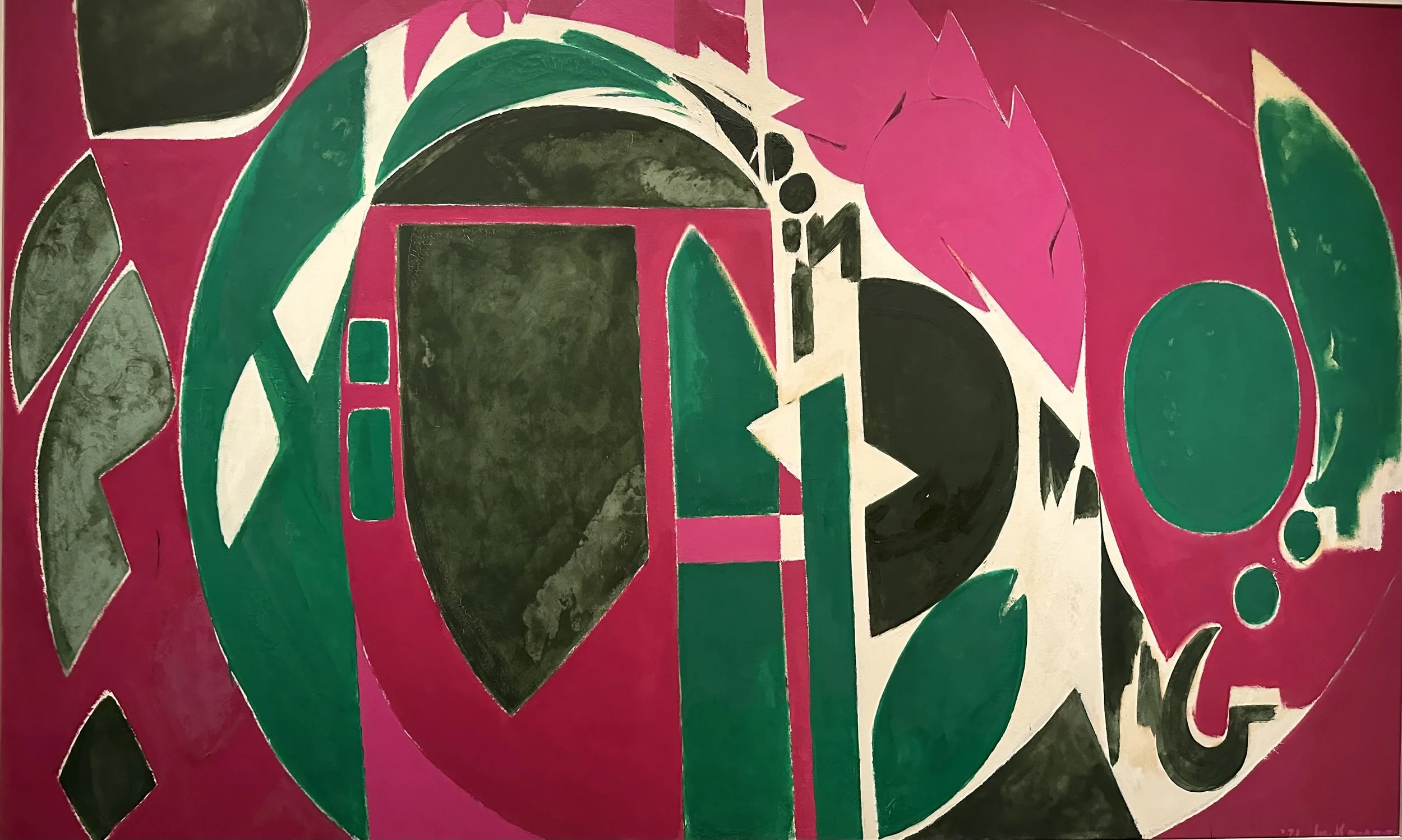
Comes the 2026 Metropolitan Museum show, I have been thinking about Pollock anew, most in connection with Lee Krasner, a star in her own right and, many of us felt, the revelation here. I’ve known that Lee Krasner painted; I’m familiar with everything she did to help Pollock and his art, but there turns out to be much more. Her long career went on for decades after Pollock died in a car crash—DUI and in the company of two women, one of whom was killed along with him. Krasner moved into his large barn studio on Long Island and felt freer there to enlarge her scale and to adopt some of his style. Here is one example. Horizontal design, swirling form, repeating elements: the painting recalls Pollock, but there is also quite a lot of the color that Krasner loved, and allusions to nature that Pollock often shunned by naming some of his work by number.
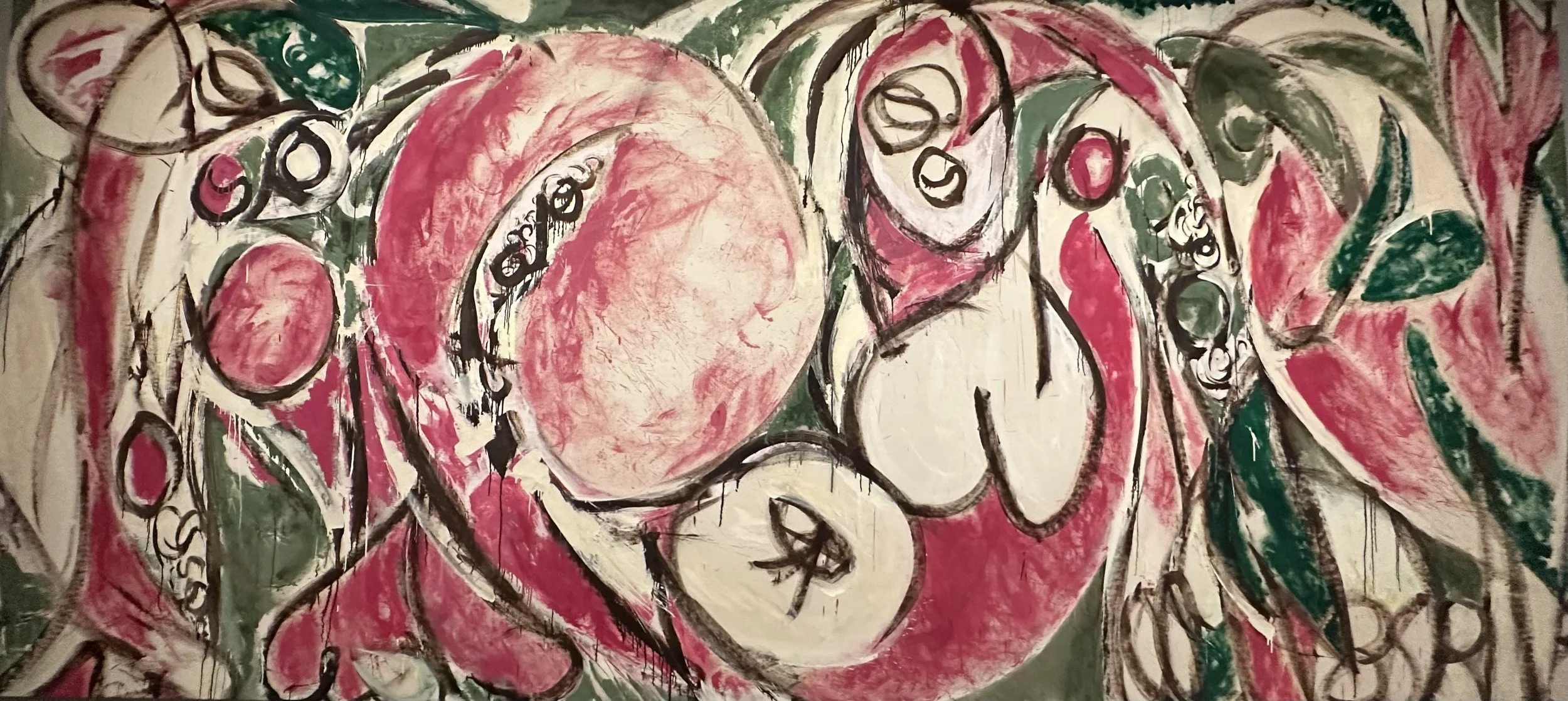
Though we (a collective we) have focused on Pollock, one of the things the Met show proves is mutual influence. Krasner was taken with Matisse from the start of her career—the color, the late cut-outs. She even created some collages that include fragments of drawings that Pollock made but did not use in his art. [There is a literal absorption here that begins the show.] Here is one example of Krasner’s collage-like work.
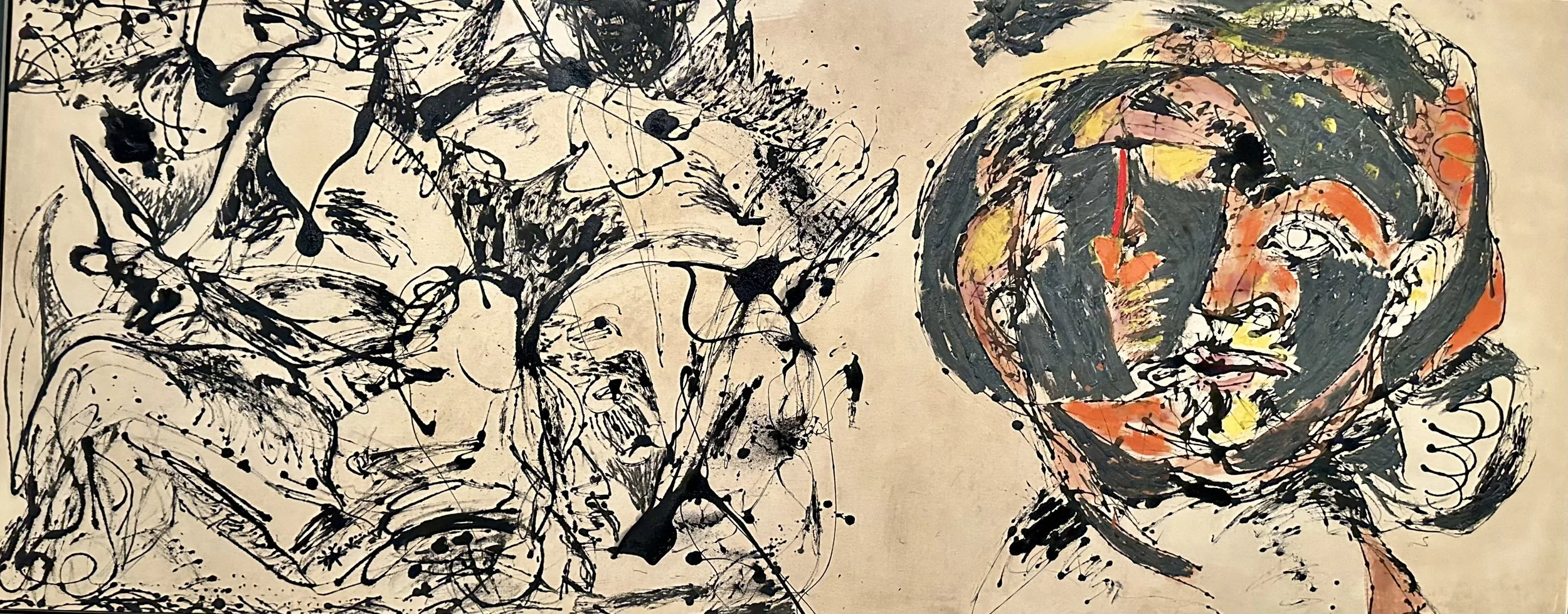
Pollock was at first more alert to Picasso and then, as life evolved, to Krasner too. Here is the last of his work displayed in the show. A spilt screen of monochromatic drip and Krasner color. We have circled back:
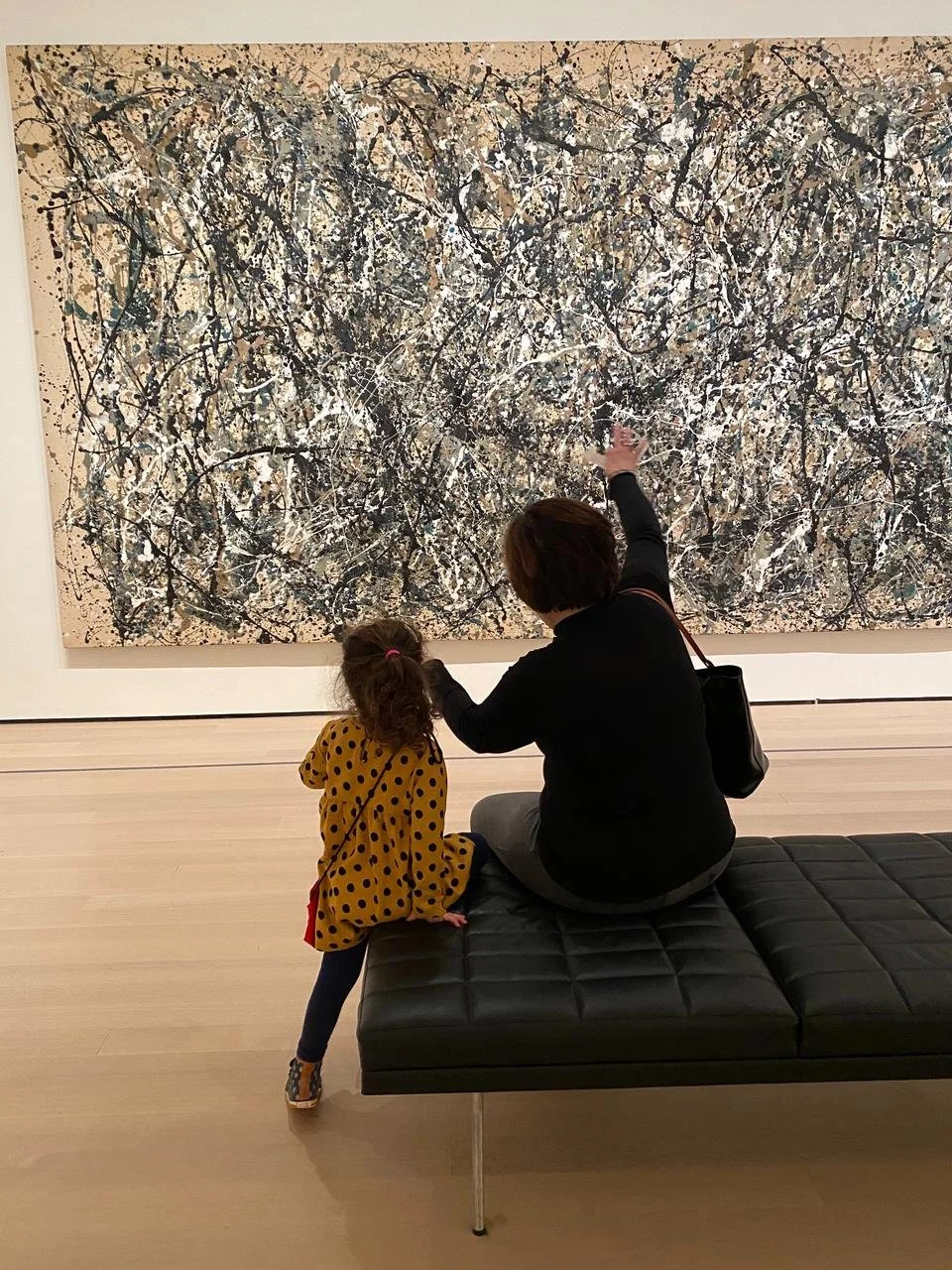
Shows like this are so good that I believe some trace will linger in the way museums show these two artists from now on. I passed on my love of Pollock to the next generation (final image below) and hope to do the same for Krasner.